
AberCollab Case Studies

Alzheimer’s Gut-Brain Workshop
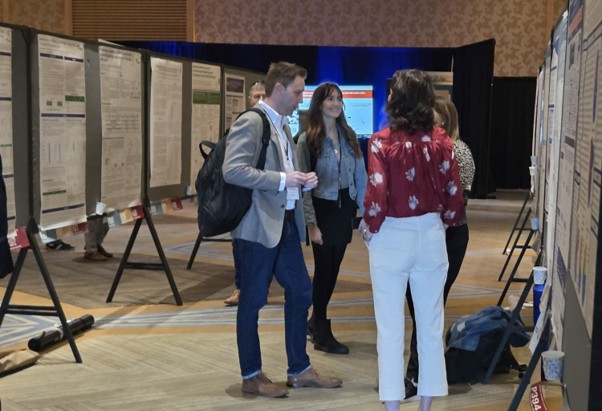
Aberystwyth University Department of Life Sciences researcher Courtney Davies received AberCollab funding support to conduct an in-person research and networking activity built around the Clinical Trials in Alzheimer’s Disease (CTAD) meeting in San Diego. The purpose was to connect our work at Aberystwyth University with internationally leading researchers in dementia, cognition, biomarker development, and digital assessment.
Networking Activity
The activity was highly successful. We were able to speak in-depth with industry and academic scientists, review recent clinical trial methodology, and learn about the latest trends in biomarkers, remote cognitive testing tools, and machine-learning-enhanced diagnostic approaches. The project went smoothly, and the meetings we held were productive, collegial, and forward-looking.
Outcomes
This activity directly influences future study design, collaborative opportunities, and strategic positioning of our research programme. Key impacts include:
- Learning how low-burden remote cognitive assessment could allow us to move future exploratory trials into a fully remote format, expand recruitment, or test in populations with mild cognitive impairment.
- Initiating potential collaboration with UK dementia biomarker initiatives with relevance to blood-based markers, which could support future grant proposals and NHS-aligned work.
- Starting discussions on how machine learning could be combined with our biofluid biomarker profiling and how we might contribute material (biofluids) to external classification pipelines.
- Considering partnership approaches with NHS-based research networks given how Scotland is integrating routine brain imaging into AI-driven research platforms.
- Identifying new tools (e.g., volcano plots) that we now plan to apply to metabotyping analyses (e.g., urine metabolites vs cognition).
- Licencing our biomarker technology to support the translation of our research outputs beyond academic settings and strengthen industry partnerships for future validation and clinical implementation.
- The development of a FoodSystems PhD opportunity.
In summary, the project has materially progressed our understanding of future clinical trial pathways, collaboration opportunities, and methodological approaches relevant to our research direction.